 How-to
How Do You Find Authentic Fusion Dining?
Last Updated: October 28, 2026
Quick Summary
To find authentic fusion dining, look past the menu photos and check the chef's background, since a credible fusion kitchen is run by someone trained in the traditions it borrows from. Then read the menu for named influences and a clear reason behind each pairing, and ask the kitchen why a combination works.
- Find the chef's name, check where they trained, and look for a stated point of view.
- Authentic fusion cooks each tradition correctly and gives the combination a clear reason to exist.
- A menu naming regions and techniques beats vague terms like Asian-inspired.
- Read three- and four-star reviews, which describe what actually happened.
- Call ahead and ask what the most popular fusion dish is and why.
Table of Contents
- Start With the Chef, Not the Menu Photo
- What Makes Fusion Cuisine Authentic
- How to Choose a Fusion Restaurant Before You Book
- Read the Asian Fusion Menu Ideas Behind the Dish Names
- Match the Room and the Service to Your Occasion
- Questions to Ask Before You Commit to a Table
- Book a Table Where Fusion Dining Is Done With Care
- Frequently Asked Questions
Start With the Chef, Not the Menu Photo
The fastest way to find authentic fusion dining is to look past the photos and read the chef's background.
They scroll a restaurant's feed, pick the prettiest dish, and book. Then they wonder why the meal felt flat.
Here is the part most guides get wrong: fusion is not a style you can fake with sauce. It is a discipline.
So before you book anywhere, do three things:
- Find the chef's name on the website or menu
- Check where they trained and what cuisines they worked in
- Look for a stated point of view, not just a list of dishes
A chef who explains why a Korean chili paste works with a French butter sauce is showing you their thinking. That is a good sign.
For a deeper look at one tradition in particular, our Korean fusion cuisine guide offers another perspective.
What Makes Fusion Cuisine Authentic
Authentic fusion cuisine is cross-cultural cooking where each tradition is cooked correctly and the combination has a clear reason to exist. It is not a random pairing. It is not a gimmick. It is two cuisines in genuine conversation.
The word "fusion" gets a bad rap, and honestly, it earned some of it. Too many kitchens slap sriracha on a burger and call it fusion. That is not fusion. That is marketing.
Real fusion dining shows three things:
- Respect for the source. The chef can cook each tradition on its own terms first.
- A reason to combine. The pairing solves a flavor problem or creates a new one worth tasting.
- Clear attribution. The menu names where the ideas come from.
That third point matters more than most diners realize. A restaurant that credits its influences is telling you it did not invent a cuisine last Tuesday.
The [Smithsonian's food history resources | si.edu] are a good starting point if you want to understand how dishes travel and change across cultures. If you are hesitant, our beginner's guide to Asian fusion food offers reassurance that fusion can be approachable.
How to Choose a Fusion Restaurant Before You Book
Choosing a fusion restaurant comes down to evidence, not vibes. Check the menu's reasoning, the reviews' specifics, and whether the kitchen can explain its own dishes.
Here is a simple way to screen a place before you commit:
| What to Check | Strong Sign | Warning Sign |
|---|---|---|
| Menu language | Names influences and regions | Vague words like "Asian-inspired" |
| Reviews | Mention specific dishes and flavors | Only praise the decor or view |
| Chef info | Named, with a real background | No name anywhere |
| Dish count | Focused, seasonal list | 60+ items across five cuisines |
| Photos | Real plates, real portions | Stock images or heavy filters |
Read reviews the way a skeptic would. "Great atmosphere" tells you nothing about the food.
A common mistake is trusting a single five-star review. Read the three- and four-star ones. That is where people describe what actually happened.
Also, call ahead with one question: "What is your most popular fusion dish and why?" The answer you get on the phone is a small preview of how the kitchen thinks.
Read the Asian Fusion Menu Ideas Behind the Dish Names
A menu is a document, and it tells you how a kitchen thinks. When you read Asian fusion menu ideas, look for dishes that name their roots. A title like "miso-braised short rib with scallion rice" tells you more than "Chef's Special." But the deeper skill is reading the logic behind the combination, not just the vocabulary. That is where most diners stop and where the real evaluation begins.
Good fusion menus tend to share a few traits:
- Dish names that reference a region or technique
- Ingredient lists that make sense together
- A short "why" note under a few signature dishes
- Small plates built for sharing and comparing
Watch out: a menu stuffed with buzzwords and no origins is usually hiding thin cooking. If every dish is "fusion-style" with no source named, ask what is actually in it.
Judge the Combination, Not the Label
The useful question is not "is this fusion?" but "does this pairing have a reason to exist?" A coherent fusion dish usually does one of four things:
- Borrows a technique across traditions. A French braise applied to a Korean short rib, or a Japanese grilling method used on a Western cut of meat. The technique travels; the result still tastes like both sources.
- Balances a flavor gap. A rich, fatty base paired with a sharp, fermented condiment. The combination solves a problem a single tradition would leave open.
- Reinterprets a classic with respect. The original dish is still recognizable, and the new element adds a layer rather than replacing the point.
- Builds a shared plate logic. Small plates that move from bright and acidic to rich and savory, the way many Asian dining traditions sequence a meal.
A novelty mashup, by contrast, usually stacks two strong signatures without resolving them: a heavy cheese sauce on a delicate fish, or a sweet glaze on a dish that was already sweet. When you taste it, each element competes instead of cooperating. That is the tell.
Look for Attribution and Lineage
Cultural respect shows up on the page. A menu that credits its influences, names the region behind a paste or a technique, and explains who taught the kitchen that tradition is telling you it did not invent a cuisine last Tuesday.
A common pattern among thoughtful fusion kitchens is collaboration: a guest chef, a documented partnership with a community cook, or a menu note explaining that a dish was developed with input from the tradition it draws on.
Read the Flavor Architecture
Flavor balance is the tell. A skilled kitchen pairs sweet with acid, heat with fat, and crunch with softness. When you taste a dish and each note has a job, the chef is thinking, not guessing. On the menu, you can often predict this before you order: a dish that lists a fermented element, a fresh herb, and a rich protein is usually built with balance in mind. A dish that lists three sweet or three salty components is usually not.
Our menu combines Eastern and Western flavors. You can see the full menu.
Match the Room and the Service to Your Occasion
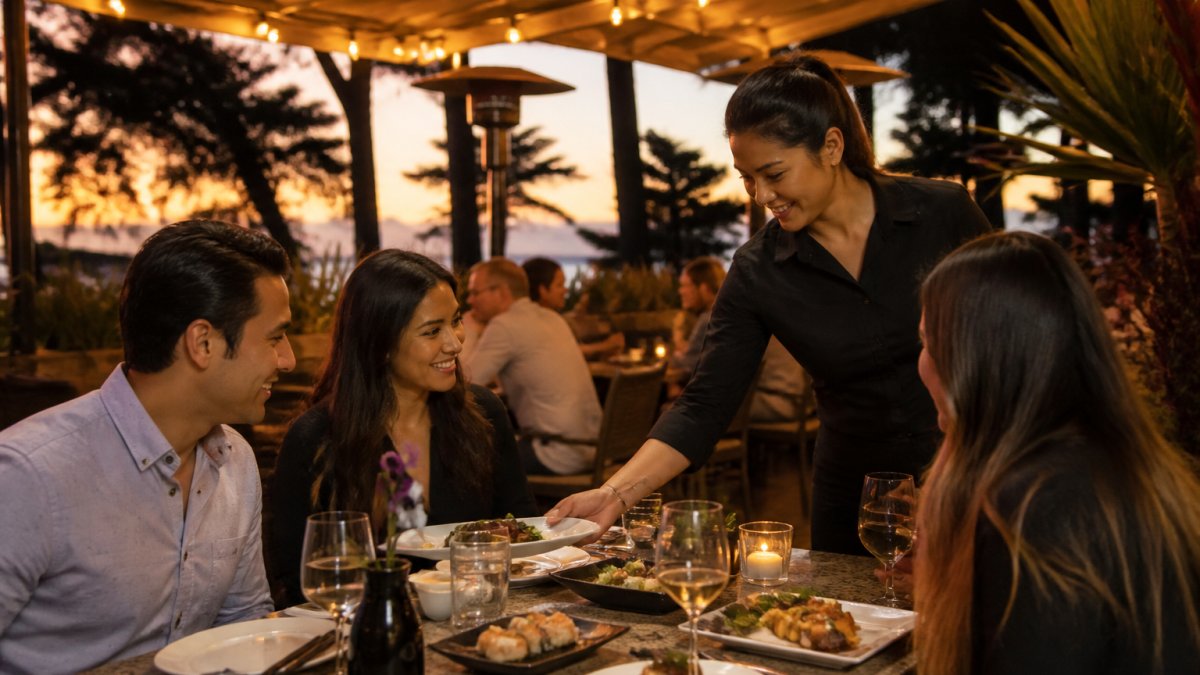
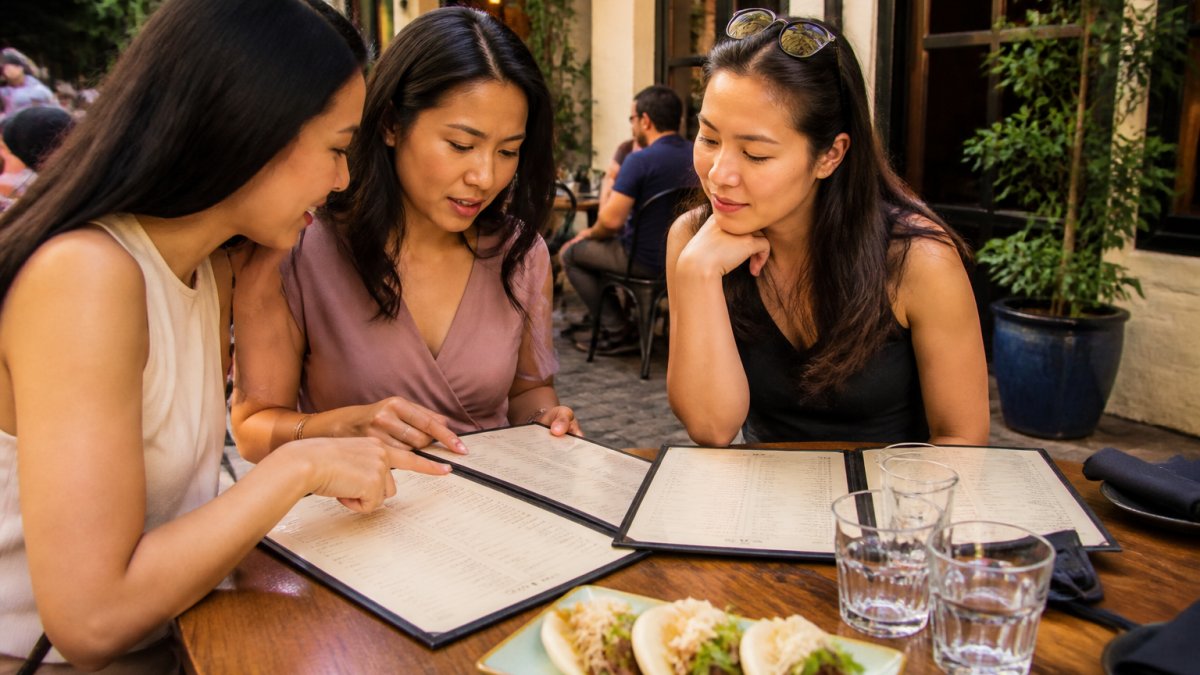
The room should fit the meal you came for. A celebration dinner needs a space that can hold a group and a server who reads the table.
Ask yourself before you book:
- Is this a date, a family meal, or a business dinner?
- Do we want a patio, a quiet corner, or a lively room?
- Will the group want to share plates or order their own?
Small plates and shareable food reward a table that likes to talk about what it is eating.
Service is part of the experience. A server who can explain a dish and steer you away from a bad pairing is worth listening to.
Questions to Ask Before You Commit to a Table
A few good questions will tell you more than an hour of scrolling. Ask them by phone or when you arrive, and listen for specifics. Vague answers are a signal. The questions below go beyond logistics and probe the things that actually separate a thoughtful fusion kitchen from a themed one.
Questions About the Food and Its Roots
- "What is your signature dish, and why does that combination work?" A strong kitchen has a fast, clear answer that names both traditions and the reason they belong together.
- "Where did the chef train, and in which of these cuisines?" You are listening for a real background, not a resume of buzzwords.
- "Which dish on the menu best shows the kitchen's point of view?" This forces a specific answer and reveals whether the menu has a center of gravity.
- "Is this dish a reinterpretation of a classic, or a new combination?" Either can be good, but the kitchen should know the difference.
Questions About Dietary Needs and Accessibility
Fusion menus can be harder to navigate than single-tradition menus because sauces and stocks often carry hidden ingredients. Ask directly:
- "Which dishes can be made gluten-free, dairy-free, or shellfish-free without losing the point of the dish?" A kitchen that can answer dish by dish is prepared. One that says "we can remove the sauce" is telling you the sauce was the dish.
- "How do you handle spice level?" Ask whether heat is built into the recipe or added at the end. Built-in heat is harder to adjust, and a good kitchen will say so.
- "Is the dining room and restroom accessible?" Ask about step-free entry, doorway width, and accessible seating if anyone in your party uses a wheelchair or mobility aid. A phone call is faster than a review scan for this.
- "Do you accommodate large groups, and is there a deposit or set menu?" Ask about timing, deposits, and patio space, and get the policy in writing if a deposit is involved.
Questions About Value
Value in fusion dining is not about the lowest price. It is about whether the technique and sourcing justify the check. Ask:
- "Which dishes are built for sharing, and how many should we order for our table?" Small-plate menus can surprise groups on the final bill. A kitchen that guides you honestly is worth trusting.
- "Are there any off-menu or seasonal items tonight?" Seasonal specials often show where the kitchen is most engaged.
- "Is the patio open tonight, and is there a minimum or weather policy?" Weather and season change this fast, and patio policies vary.
If you have a party coming, say so early. Large groups need planning, and a restaurant that tells you that up front is being straight with you.
Curious diners often ask us whether fusion will feel too adventurous. It does not have to be. A good kitchen will guide you toward a dish that meets you where you are. Our FAQ covers common pre-booking questions like dietary options, reservations, and patio seating.
Book a Table Where Fusion Dining Is Done With Care
Finding authentic fusion dining is a skill, and like any skill it gets easier with practice. Check the chef. Read the menu's reasoning. Ask real questions. Then trust the table.
At Pangaea Grill, we serve authentic Asian fusion that blends Eastern and Western flavors, using the finest local ingredients. You can check our hours and location to plan your visit. Our warm dining room and patio welcome guests for breakfast, lunch, and dinner. We have been named Best Restaurant in Carmel-by-the-Sea for 2022, 2023, and 2024.
Frequently Asked Questions
What makes fusion cuisine authentic?
Authentic fusion dining combines culinary traditions. Pangaea Grill specializes in Asian fusion that blends Eastern and Western flavors.
How can you tell if an Asian fusion restaurant uses quality ingredients?
Pangaea Grill describes its dishes as crafted from the finest local ingredients.
What should you look for on an Asian fusion menu?
Pangaea Grill specializes in Asian fusion cuisine that blends Eastern and Western flavors.
How do you choose an Asian fusion restaurant for a special occasion?
Pangaea Grill offers a warm dining area and a patio for breakfast, lunch, and dinner.
The best fusion meal starts with a good decision. Let Pangaea Grill make that decision easy, with an award-winning menu, a warm patio, and service that treats every table like it matters. Get started with Pangaea Grill and book a table for a fusion dining experience worth remembering.