 How-to
How to Identify Authentic Asian Fusion Cuisine
Last Updated: November 7, 2026
Quick Summary
Authentic Asian fusion respects the traditions it borrows from and makes deliberate, explainable changes rather than using those traditions as decoration. To judge it, check whether the chef can explain each element, whether flavors are balanced, and whether the menu honestly names its influences.
- Judge fusion by clear intent, not by how exotic the dish tastes.
- A dish using soy sauce alone does not prove authenticity, since soy sauce appears across many cuisines.
- Check the core technique of the cuisine the dish claims, such as wok hei for Cantonese stir-fries.
- Look for specific named regions and ingredients on the menu rather than vague claims like authentic.
- Ask your server which dishes use traditional techniques and which are adapted.
Table of Contents
- What Makes Asian Fusion Authentic
- Asian Fusion vs. Traditional Asian Cuisine: Where the Line Falls
- A Cuisine-by-Cuisine Framework for Judging Fusion Dishes
- How to Evaluate an Asian Fusion Menu
- Judging Flavor Balance: Sweetness, Sauce, and Texture
- Cultural Context, Attribution, and Respectful Adaptation
- Questions to Ask Your Server Before Booking Your Table at Pangaea Grill
- Frequently Asked Questions
What Makes Asian Fusion Authentic
Asian fusion is a style of cooking that blends techniques, ingredients, and flavors from different Asian cuisines, often combined with Western methods, and authentic Asian fusion stays honest about where those influences come from.
Here is the short answer: authentic Asian fusion respects the traditions it borrows from. It does not use those traditions as decoration.
Most people judge fusion by whether it tastes "exotic." That is the wrong test. Look instead for:
- Clear intent: The chef can explain why each element is there.
- Balanced flavors: No single sauce, sugar, or fat hides everything else.
- Respect for ingredients: Key components are used properly, not swapped out at random.
A common mistake is assuming that more ingredients mean more authenticity. For a companion piece on finding genuine fusion dining, see finding authentic fusion dining. Often the reverse is true.
Asian Fusion vs. Traditional Asian Cuisine: Where the Line Falls
Traditional Asian cuisine follows the methods and flavor profiles that developed within a specific region over generations.
Think of it this way. A Korean-inspired taco with gochujang and pickled vegetables is fusion.
Watch out: many diners assume any dish with soy sauce is authentic. Soy sauce appears across many cuisines, so it tells you very little on its own.
Traditional and fusion cooking both have value. To weigh the two options side by side in Carmel, read choosing between Asian fusion and sushi.
A Cuisine-by-Cuisine Framework for Judging Fusion Dishes
Each Asian cuisine has its own rules, and a framework that works for Japanese dishes may fail for Thai or Chinese ones. Judge each dish against the traditions it draws from.
Japanese-Derived Dishes
Japanese cooking rewards restraint and precision. Look for:
- Rice and noodle handling. Sushi rice should be seasoned and cooled to body temperature, not served hot and wet. Ramen noodles should be cooked to order and retain a firm bite; noodles that sit and soften signal a shortcut.
- Dashi as a base. Many Japanese dishes rest on dashi made from kombu and bonito flakes. A fusion dish that claims Japanese inspiration but tastes only of soy sauce and sugar is missing the savory backbone.
- Tempura batter. Good tempura batter is thin, cold, and briefly fried, producing a lacy crust rather than a thick, heavy coating.
A Japanese-inspired fusion dish can add a new element, such as a citrus ponzu or a different protein, but it should keep the clean, layered flavor logic of the source.
Chinese-Derived Dishes
Chinese cuisine is regional, and the technique should match the region invoked:
- Wok hei. Cantonese stir-fries should carry a slight char and smoky aroma from high heat. If a dish labeled "wok-seared" tastes steamed, the wok was not hot enough.
- Dumpling wrappers. Siu mai and har gow should have thin, tender wrappers that hold their shape. Thick, gummy wrappers suggest a shortcut.
- Sichuan peppercorn. Dishes that claim Sichuan inspiration should show the numbing, tingling sensation of Sichuan peppercorn, not just chili heat.
Watch out: a menu that uses "Chinese" as a single category without naming a region is often borrowing names without the underlying technique.
Thai-Derived Dishes
Thai cooking balances sweet, sour, salty, and spicy at once:
- Curry pastes. A good Thai curry starts from a paste of lemongrass, galangal, chilies, and shrimp paste, not from a bottled sauce alone. The paste should smell aromatic before the coconut milk is added.
- Fish sauce and lime. These are the primary salty and sour notes. A Thai-inspired dish that tastes only sweet is out of balance.
- Fresh herbs. Thai basil, cilantro, and mint are usually added late so they stay bright.
Korean-Derived Dishes
Korean cooking is built on fermentation and layered seasoning:
- Gochujang and doenjang. These fermented pastes should taste deep and complex, not just spicy or salty.
- Banchan and pickles. Kimchi and other pickles should be fermented, with a tangy, slightly effervescent quality, not simply vinegar-soaked.
- Grilling and table cooking. Korean barbecue relies on marinades and high heat; a fusion dish that claims Korean inspiration but uses a sweet glaze without fermentation is borrowing the name only.
Vietnamese-Derived Dishes
Vietnamese cooking emphasizes fresh herbs, light broths, and balance:
- Broth clarity. Pho broth should be clear and aromatic from star anise, cinnamon, and charred ginger, not cloudy from shortcuts.
- Herb plate. A Vietnamese-inspired dish should offer fresh herbs and lime on the side, letting the diner adjust the balance.
- Rice paper and noodles. Fresh rice paper should be pliable, and rice noodles should be cooked just tender.
Indian-Derived Dishes
Indian cooking varies widely by region, and the spice layering matters:
- Whole spices. Dishes should show the aroma of whole spices bloomed in oil, such as cumin, cardamom, and mustard seed.
- Tempering. A final tempering of spices in hot oil, called tadka, should smell fresh and bright, not stale.
- Regional names. A dish labeled "Madras" or "Kashmiri" should reflect the specific spice profile of that region rather than a generic curry powder.
Using the Framework
When you order a fusion dish, identify which cuisine it claims to draw from, then check the two or three markers most central to that cuisine. For a deeper look at one cuisine, see this Korean fusion guide. A dish can pass on technique but fail on seasoning, or the reverse. The goal is not to demand purity but to see whether the kitchen understands the tradition well enough to change it on purpose.
How to Evaluate an Asian Fusion Menu
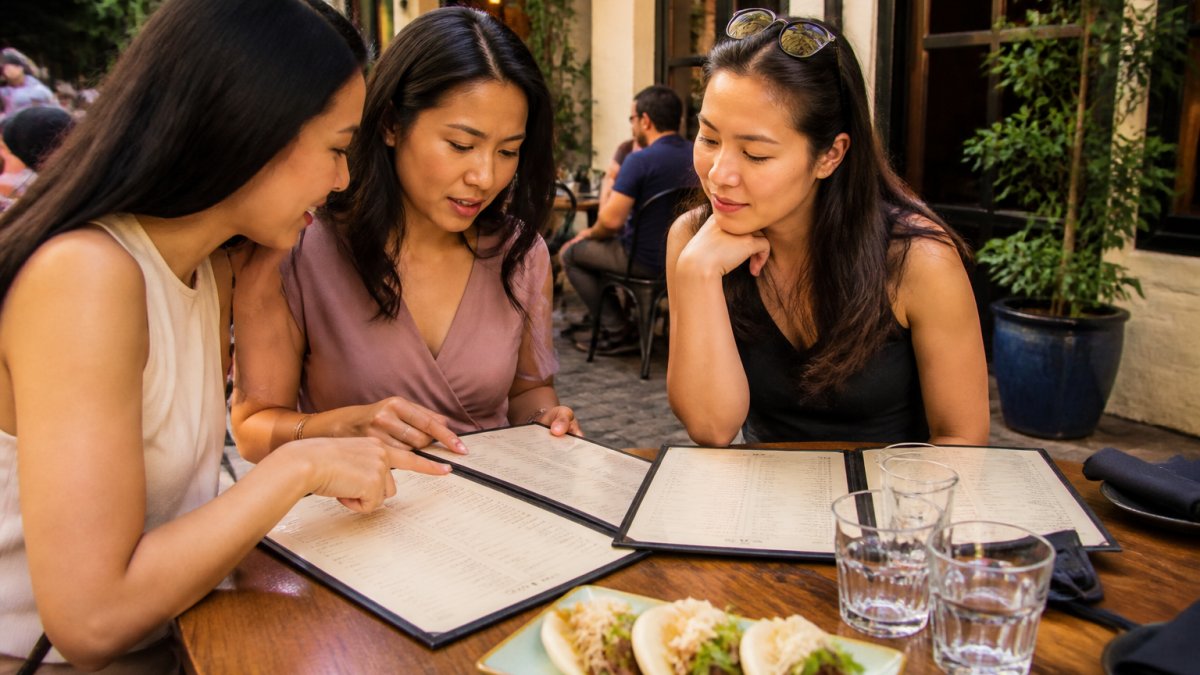
The menu is your first clue. Read it before you order.
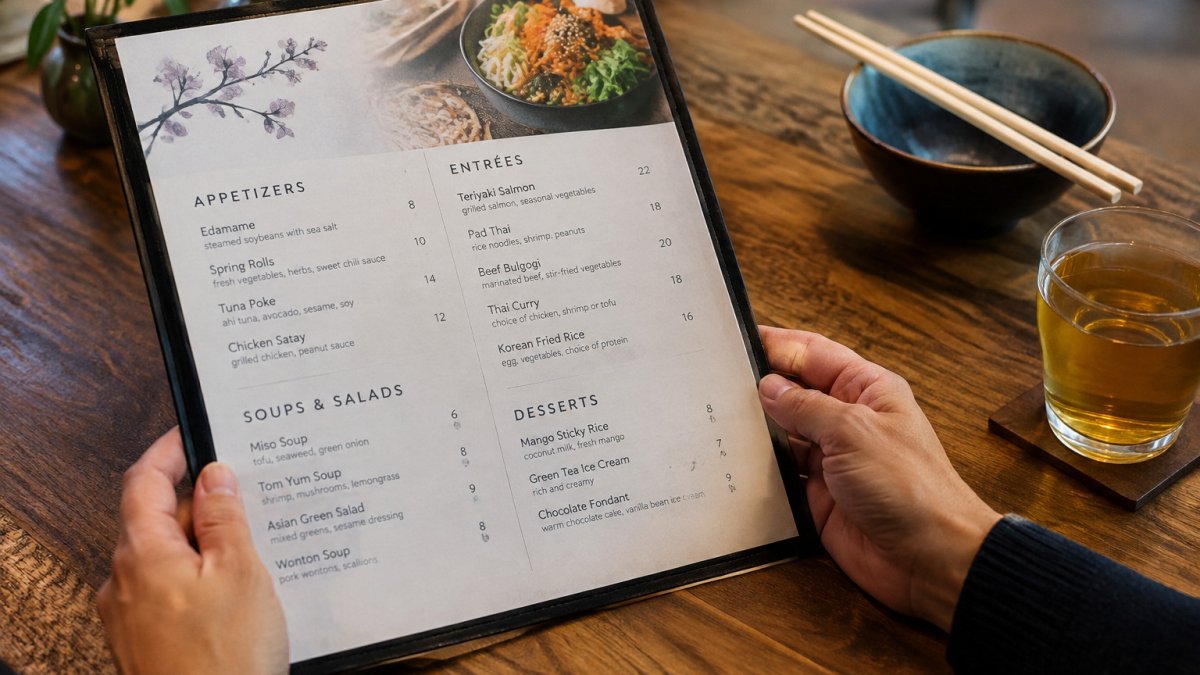
!Close-up of hands holding a printed restaurant menu at a wooden table beside a bowl of chopsticks and a glass of tea
Look for these signs:
- Dish names that explain themselves. Clear descriptions of components suggest the kitchen knows what it is making.
- A focused selection. A menu that does everything at once often does nothing especially well.
- Specific ingredient mentions. Named ingredients, such as a particular chili or noodle type, show care.
Be cautious with menus that rely on vague claims such as "authentic" or "secret recipe" without any detail behind them.
Judging Flavor Balance: Sweetness, Sauce, and Texture
Flavor balance is where many fusion dishes succeed or fail. Taste for these three things:
- Sweetness: Some fusion dishes use sugar heavily to appeal to a wide audience. A touch of sweetness can work. Sauces that taste mostly sweet usually mask weak ingredients.
- Sauce coverage: The sauce should enhance the main ingredient. If you cannot taste the protein or vegetables under it, the dish is heavily sauced.
- Texture: Crisp, tender, chewy, and soft elements should contrast on purpose. Mushy or uniform textures often signal shortcuts.
The numbers are not the point. If you are new to bold fusion flavors, this beginner's guide explains how adventurous these combinations really are. What matters is whether each bite tastes layered and whether the flavors feel vibrant rather than flat.
Cultural Context, Attribution, and Respectful Adaptation
Fusion cooking often borrows from communities whose food traditions carry history and meaning. Respectful adaptation credits those roots and avoids presenting borrowed dishes as entirely new inventions. Most competitors stop at "be respectful" without explaining what that looks like on a menu or in a dining room. Here is a practical way to judge it.
What Attribution Looks Like
Attribution is the practice of naming where an idea, technique, or dish comes from. On a menu, it can appear as:
- Named source cuisines. A dish described as "Sichuan-style" or "Thai-inspired" tells you the kitchen is naming its influence rather than hiding it.
- Specific regional references. "Cantonese," "Isan," or "Kerala" are more precise than "Asian" and suggest the kitchen knows the tradition.
- Credit for borrowed dishes. If a dish is closely based on a traditional recipe, the menu should say so rather than presenting it as an original creation.
A common pattern is a menu that uses a traditional dish name but changes the ingredients without saying so. That is not necessarily dishonest, but it is a missed opportunity to explain the change.
Respectful Adaptation Versus Appropriation
Adaptation becomes appropriation when a tradition is used as decoration, stripped of context, or presented as new without credit. Ask three questions:
- Is the change explained? A kitchen that says why it swapped an ingredient or changed a technique is adapting with intent.
- Is the source still recognizable? If the dish no longer resembles the tradition it names, the name may be misleading.
- Is the culture represented beyond the plate? Look at whether the restaurant describes the tradition accurately in its menu language and marketing, or reduces it to a trend.
Watch out: a menu that uses a culture's name only to signal exoticism, without any specific reference to region or technique, is a warning sign.
How Diners Can Respond
You do not need to interrogate staff. A few respectful questions go a long way:
- "Which tradition inspired this dish?"
- "Is this close to a traditional version, or is it a new interpretation?"
- "What did the kitchen change, and why?"
Clear, specific answers are a good sign. So is a menu that names its sources without being asked. Supporting restaurants that credit their influences encourages better fusion cooking across the board.
Questions to Ask Your Server Before Booking Your Table at Pangaea Grill
Asking good questions is one of the easiest ways to judge a kitchen. Consider asking:
- Which dishes use traditional techniques, and which are adapted?
- What is the main flavor the chef wants you to notice in this dish?
- Can you describe where the main ingredients come from?
Clear, confident answers are a good sign. Check the restaurant's website for current hours and location before you visit.
Pangaea Grill serves breakfast, lunch, and dinner in Carmel-by-the-Sea, with a patio setting and menus built on honest Asian fusion. Our recognition as Best Restaurant of 2022, 2023, and 2024 in Carmel-by-the-Sea reflects the care we put into every plate. Reserve your table today and taste the difference for yourself.
Frequently Asked Questions
How can you tell if an Asian fusion restaurant is authentic?
Look for a menu that explains its cooking methods and ingredient choices rather than relying on generic descriptions. Authentic fusion kitchens usually keep the core technique of at least one source cuisine intact, such as proper wok heat for stir-frying or traditional steaming for dumplings, and then build new flavors on top of it. Ask whether the chef has a training background in the cuisines represented, and notice whether dishes are balanced in salt, acid, and heat rather than simply sweet or heavily sauced. A menu that names its influences clearly and explains how each dish is put together is usually a good sign.
Does authentic Asian fusion need to follow traditional recipes?
No. Fusion cooking is defined by intentional combination, so a dish does not need to match a traditional recipe to be well made. What matters is whether the cook understands why the traditional recipe works and makes changes deliberately. A dish that swaps an ingredient for a sound reason, such as a local seafood in place of an imported one, can still be thoughtful. A dish that combines elements at random, or uses sugar and sauce to hide poor technique, is harder to defend, regardless of whether it follows a recipe.
How is Asian fusion different from traditional Asian cuisine?
Traditional Asian cuisine preserves established dishes, techniques, and flavor profiles within a regional food culture. Asian fusion combines elements from two or more culinary traditions, often including Western ingredients or methods, to create new dishes. Neither is inherently better. Traditional cooking is judged on fidelity to its roots, while fusion is judged on whether the combination is coherent, balanced, and respectful of the cuisines it draws from.
What questions can you ask when ordering Asian fusion?
Ask your server which dishes the kitchen is most proud of and why, how a particular dish is prepared, and which ingredients are local or imported. You can also ask whether a dish can be made less sweet or less heavily sauced, and whether the kitchen accommodates allergens or dietary restrictions. Restaurants can usually answer these questions in person, and current menu details and reservation options are available on the restaurant's website.