 How-to
What Justifies High-End Restaurant Prices in America
Last Updated: November 21, 2026
Quick Summary
High-end restaurant prices reflect real costs: skilled chef and service labor, carefully sourced ingredients, prime-location rent, and a comfortable dining room. Much of the bill covers labor and occupancy, which often outweigh the cost of the food itself, leaving restaurants with thin profit margins.
- Labor, especially skilled kitchen staff and trained servers, is often one of the largest costs in fine dining.
- Ingredient costs are paired with waste from trimming and spoilage, which is built into menu prices.
- Labor and occupancy together often outweigh food cost, and margins may be single digits.
- Judge value by scoring sourcing, technique, service, format fit, and total cost, not menu price alone.
Table of Contents
- Why High-End Restaurant Prices Look the Way They Do
- Why Fine Dining Is Expensive to Operate: Labor, Rent and Overhead
- Ingredient Quality, Sourcing and Waste
- A Sample Cost Breakdown for One Fine-Dining Meal
- Restaurant Menu Pricing Strategies: Tasting Menus, à la Carte and Pairings
- Fine Dining Portion Sizes and What They Mean for Value
- How to Decide Whether a High-End Meal Is Worth Its Price
- Booking Your Next Special-Occasion Dinner at Pangaea Grill
- Frequently Asked Questions
Why High-End Restaurant Prices Look the Way They Do
Fine dining checks often make people wince. A dinner for two at a high-end restaurant can add up quickly before drinks. But what justifies high-end restaurant prices in America is less about greed and more about how the economics of a serious kitchen work.
The short answer is that you pay for skilled labor, carefully sourced ingredients, a comfortable room, and a level of service that takes many people to deliver. Each of those costs is real, and each one shows up on the bill.
Most of the pricing debate comes down to a simple gap. A casual spot may serve a plate in ten minutes with a small crew. A high-end kitchen may spend days preparing a single component. That difference is the heart of the matter.
Why Fine Dining Is Expensive to Operate: Labor, Rent and Overhead
Labor is often one of the largest costs in a fine-dining kitchen. A skilled chef and trained line cooks command real wages, and a high-end kitchen often needs more of them per guest than a casual restaurant does.
Front-of-house staff matter just as much. Servers who know the menu, sommeliers who pair wine, and hosts who greet guests by name all add cost. Service at this level is hard to automate, which is why it stays expensive.
Real estate and buildout add to the total. Prime locations carry high rent, and a dining room built for comfort, with quality linens, tableware, and lighting, takes serious investment. Utilities, insurance, and equipment keep adding up every month, whether the room is full or not.
- Chef and kitchen wages
- Trained servers and sommeliers
- Rent in a prime location
- Dining room buildout and décor
- Insurance, utilities, and equipment upkeep
Ingredient Quality, Sourcing and Waste
Ingredients are the next major factor. Sourcing high-quality local produce, seafood, and meat generally costs more than buying from a standard wholesale catalog. Seasonal menus also mean buying what is available now, which can shift prices from week to week.
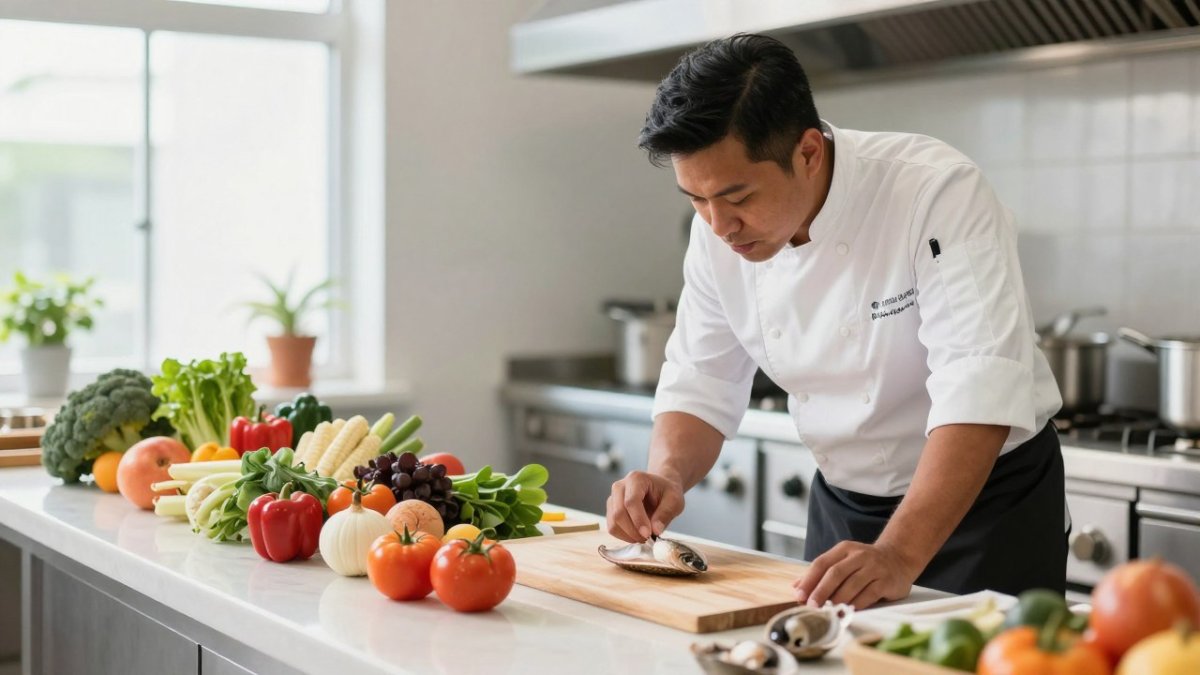
Waste is the hidden cost that many diners never see. A kitchen that trims a vegetable to its best 60 percent, or sets aside a fish portion that does not meet standard, is paying for product it cannot serve. Low-volume specialty items can also sit unused, and that loss gets built into the menu price.
Preparation time adds more. Some sauces and stocks simmer for hours, and some ingredients need careful handling before they reach the plate. That time is paid labor, even though the guest only tastes the result.
A Sample Cost Breakdown for One Fine-Dining Meal
Most explanations of high-end pricing stay abstract. A worked example makes the mechanics visible.
Consider a hypothetical three-course meal priced for illustration only. Food and beverage costs in full-service restaurants vary widely as a share of the menu price.
| Cost line | Illustrative amount on a $120 menu price | What drives it |
|---|---|---|
| Ingredients, net of waste | About $30 to $36 | Wholesale price of protein, produce, dairy, and pantry items, plus the yield lost to trimming and spoilage |
| Kitchen labor | About $22 to $28 | Chef and line-cook wages, prep hours, and the labor baked into stocks, sauces, and garnishes |
| Front-of-house labor | About $14 to $18 | Servers, bussers, hosts, and any sommelier or captain time allocated to the table |
| Occupancy | About $10 to $14 | Rent or mortgage, property taxes, and the amortized cost of the buildout and equipment |
| Other operating costs | About $8 to $12 | Utilities, insurance, linens, tableware replacement, POS and reservation software, marketing, and card-processing fees |
| Operating margin | Remainder, often single digits as a percentage | What is left to cover debt service, repairs, and a return to the owner |
The first thing to notice is that the ingredient line is not the biggest line. Because labor and occupancy shape the bill as much as ingredients do, the same costs help explain why gourmet tacos cost more than their fillings alone might suggest.
The second thing to notice is the margin. A restaurant that clears a few cents on each dollar of sales is doing well. A slow Tuesday, a spoiled delivery, or a no-show party can erase the profit on several covers.
Watch out: a single percentage split is not universal. A steakhouse, a seafood-focused room, and a vegetable-driven tasting menu will land in different places, and a restaurant with a large wine program may show a very different beverage-cost line.
A useful way to read the table is to ask which line would move if the restaurant changed one thing. Swap in a cheaper protein and the ingredient line falls, but the labor to prepare it may not.
Illustrative cost lines on a $120 fine-dining menu price
Restaurant Menu Pricing Strategies: Tasting Menus, à la Carte and Pairings
Pricing formats change how a bill feels. An à la carte order lets you choose each dish and control spending. A tasting menu bundles several courses into one set price, which can make the total easier to predict but often costs more overall.
Beverage pairings add another layer. A pairing matches a drink to each course, and it is usually priced separately from the food. For a special evening, many diners find a pairing adds real value, while others prefer a single bottle.
Group and private dining also follow their own pricing logic. Larger parties may need set menus so the kitchen can plan ahead, which affects how each guest's bill is structured.
Fine Dining Portion Sizes and What They Mean for Value
Fine-dining portions are often smaller than what diners expect from casual restaurants. A single plate may hold a few bites of a main protein with precise garnishes. That can feel like less food for the money.
Smaller portions are not a sign of cutting corners. Each plate is built to highlight a balance of flavors and textures, and the kitchen spends more effort per bite. The value is in the experience of the dish, not the volume.
Think about how many courses you want. A tasting menu with five or six small plates may leave you full, even though each plate is modest. Judging value by the whole meal, rather than one plate, gives a fairer comparison.
How to Decide Whether a High-End Meal Is Worth Its Price
Value at this level is not a single number. It is a match between what you want from the evening and what the restaurant is built to deliver. A practical way to judge it is to score the meal on a short list of criteria before you book, then compare that score against the price you are being asked to pay.
Use these five criteria, and be honest about which ones actually matter to you:
- Food and sourcing. Does the menu describe where ingredients come from, or name a farm, fishery, or producer? Named sourcing is a signal that the kitchen is buying with intent rather than from a catalog. A menu that changes with the season is usually a sign of a kitchen working closer to the source.
- Technique and originality. Are there dishes you could not reasonably make at home, or preparations that take days? A sauce that simmers for hours, a ferment, or a pastry program are all signs of labor you are paying for. If the menu reads like something you could assemble from a grocery run, the premium is harder to justify.
- Service and setting. Will the room and the staff carry a special occasion? A calm room, knowledgeable servers, and a pace that lets you linger are part of the product. If you want a quick, loud, high-energy dinner, a formal room may be the wrong fit at any price.
- Format fit. A tasting menu bundles many courses into one price and is usually the most expensive way to eat, but it also removes decision fatigue and shows the kitchen's range. An à la carte order lets you control spend and is often the better choice if you want a lighter meal or a narrower budget.
- Total cost, not menu price. Tax, tip, and any beverage pairing or supplemental course sit on top of the menu price. A $120 menu can become a $200 evening per person once a pairing, tax, and gratuity are added. Check the restaurant's posted menu and any stated fees before you commit.
A simple scoring habit helps. Rate each criterion from one to five based on what you can learn from the menu, the website, and recent reviews, then ask whether the total price feels fair for that score. A high score on food and technique with a low score on setting may still be worth it if you care most about the cooking.
Watch out: do not assume a higher price means better food. Price tracks cost structure and positioning as much as it tracks quality, and a mid-priced restaurant with a focused menu can outperform an expensive room on the plate. The question is not whether the restaurant is expensive, but whether the specific things you value are the things the restaurant spends its money on.
If the answer is yes, book with confidence. If the answer is no, a less expensive restaurant that matches your priorities will usually leave you happier than a high-end meal chosen for the wrong reasons.
Booking Your Next Special-Occasion Dinner at Pangaea Grill
If a memorable meal is what you want, Pangaea Grill is located in Carmel-by-the-Sea. Our award-winning Asian fusion menu blends Eastern and Western flavors, and our warm patio is a lovely setting for a celebration.
Browse the full menu before you visit, or plan your visit to Pangaea Grill for hours and directions. Whether you are celebrating a milestone or just want a great meal, our team is happy to help you choose the right dining experience. Reservations are the way to secure your table, and you can contact us to ask about larger group bookings.
Frequently Asked Questions
Are high-end restaurant prices worth it?
Whether a high-end meal is worth its price depends on what you value. Fine dining prices cover skilled kitchen labor, sourced ingredients, rent, service staffing and food that is often wasted or prepared in small quantities. Diners who want a memorable special-occasion meal, attentive service and a polished setting tend to feel the price matches the experience. Diners mainly looking for filling food will usually get better value from a casual restaurant. Check the menu, the tasting-menu price and the included beverages before booking so you know the full cost.
Why are portions often smaller at fine dining restaurants?
Fine dining kitchens plan smaller portions so each course is balanced and the meal lasts several courses without overwhelming the diner. Small portions also let chefs use premium, low-volume ingredients without making the plate unaffordable to produce. Expect a tasting menu to feel light if you are used to large entrees, and consider ordering an extra course or a side if you want more food.
How do I know if the cost of a special-occasion dinner is justified?
Compare what you receive with what you pay: the number of courses, the quality of the ingredients, the level of service and the atmosphere. Read recent reviews for consistency, since a restaurant that performs well on repeated visits is usually a better value than one that only impresses once. Booking a tasting menu for a celebration often costs more than ordering a few entrees, so decide in advance what kind of evening you want.
Can I get a high-end meal without spending a lot?
Yes. Lunch service at many fine dining restaurants is often priced lower than dinner, and a shorter menu or a single signature dish can still show the kitchen's quality. Avoid stacking expensive add-ons such as premium wine pairings unless they matter to you. Ask your server about the seasonal menu and the portion size of each dish so you can choose a combination that fits your budget.