 How-to
How to Pair Asian Fusion Flavors With Local Wine
Quick Summary
To pair how to pair asian fusion flavors with local wine, start with the sauce rather than the cuisine label: sweet glazes suit off-dry wine, sour or tangy sauces suit high-acid whites, savory sauces suit wines with body and low tannin, and spicy sauces suit low-alcohol, slightly sweet wines.
- Sweet sauces like teriyaki or hoisin pair with off-dry wine that has bright fruit.
- Sour or tangy sauces call for high-acid white wine to keep up with the dish.
- Dry, high-alcohol reds often clash with spicy sauces, making the heat taste bitter.
- Off-dry Riesling is the best choice for most fusion menus because sweetness balances heat.
Table of Contents
- Start With the Sauce, Not the Cuisine Label
- A Repeatable Method for Unfamiliar Fusion Dishes
- Matching Wine Body, Sweetness and Acidity to Dish Intensity
- Riesling Wine Pairing With Asian Food
- Gewürztraminer Wine Pairing With Asian Food
- Best Red Wine With Asian Food and When to Choose It
- Troubleshooting Difficult Combinations and Choosing Your Next Bottle
- Frequently Asked Questions
Start With the Sauce, Not the Cuisine Label
Last Updated: November 22, 2026
Most people pick wine by the restaurant's cuisine label, and that is where how to pair asian fusion flavors with local wine goes wrong. An "Asian fusion" dish can mean soy-ginger glaze, sweet chili, black pepper, or coconut curry. Each one pulls the wine in a different direction.
Think of the sauce as the dominant voice on the plate. A sweet, sticky glaze needs a wine with some sweetness to hold its own. A sharp, vinegary dressing needs acidity to keep up. Rich, savory broths need a wine with enough structure to stand next to them without tasting thin.
This shift is simple but useful:
- Sweet sauces (teriyaki, hoisin, plum): look for off-dry wine with bright fruit.
- Sour or tangy sauces (rice vinegar, citrus, pickled ingredients): look for high-acid white wine.
- Savory sauces (soy, fish sauce, miso): look for a wine with body and low to medium tannin.
- Spicy sauces (chili, Sichuan pepper): look for a wine with some sweetness and low alcohol.
Watch out: Dry, high-alcohol reds often clash with spicy sauces. The heat makes the wine taste bitter and hot. Choose something softer.
A Repeatable Method for Unfamiliar Fusion Dishes
When a dish is new to you, you don't need a memorized list. You need a method you can repeat. Here is the one we use when a dish doesn't fit a familiar pattern. If you are unsure how adventurous to be, read the beginner's guide to fusion food first.
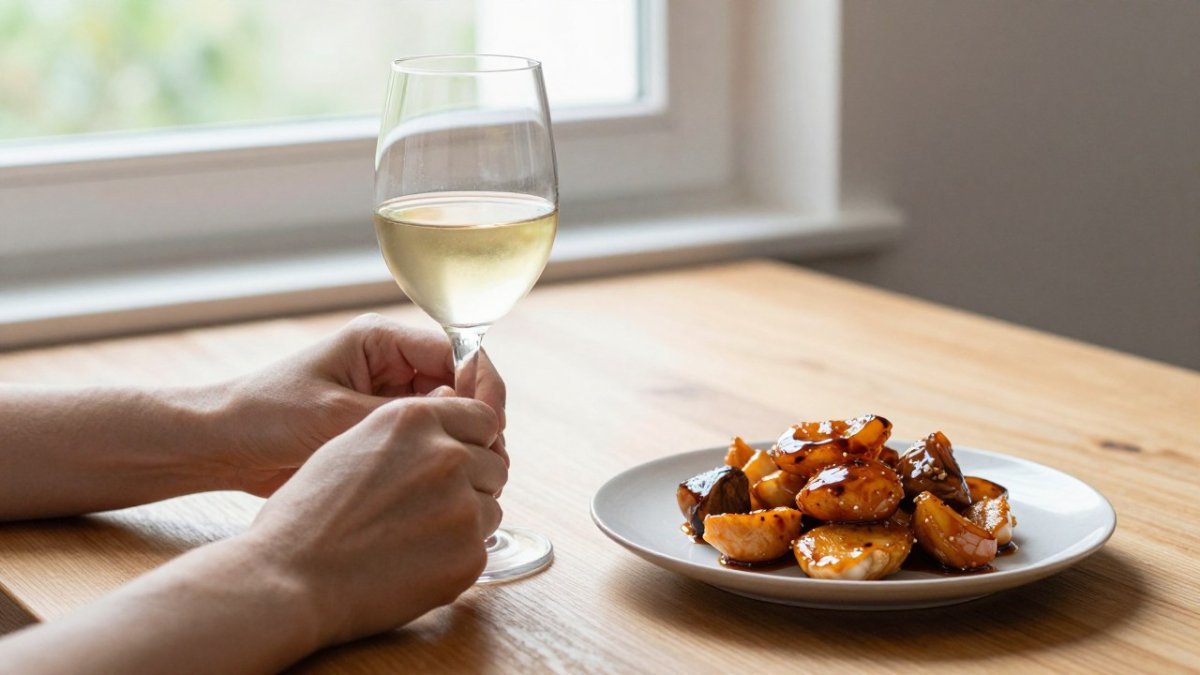
Step 1: Name the sauce. Ask what the strongest flavor is: sweet, sour, salty, or spicy. A soy-ginger glaze reads savory first; a sweet chili sauce reads sweet and spicy at once. Write down the first flavor that hits your tongue.
Step 2: Name the cooking method. Fried food needs acidity to cut the oil. Grilled food can handle more body. Steamed dishes stay light and need a wine that won't overpower them. A common pattern is that the cooking method changes the wine's weight more than the cuisine label does.
Step 3: Choose the wine style that matches the strongest flavor. Use the table below as a starting point, then adjust for local availability. You can browse the Asian fusion menu to pick a dish to test this method on.
| Dish Feature | Wine Style to Try | Why It Works |
|---|---|---|
| Sweet glaze | Off-dry Riesling or Chenin Blanc | Sweetness matches sweetness |
| Sour or vinegar | High-acid white such as Sauvignon Blanc | Acid refreshes the palate |
| Fried or crispy | Sparkling wine or dry rosé | Bubbles and acid cut through oil |
| Grilled meat | Light, fruity red such as Pinot Noir or Gamay | Fruit balances char |
| Spicy chili | Low-alcohol off-dry white | Less heat on the palate |
| Rich umami broth | Soft red or textured white with low oak | Body stands up without metallic clash |
Step 4: Adjust for local wine. Once you know the style, look for a locally made wine that fits it. If the local option is higher in alcohol, serve it chilled to soften the heat. If it is more tannic, save it for grilled meats rather than spicy sauces.
This method works because it focuses on what you taste, not what the menu calls the dish. A useful way to remember it is to ask one question: "What does this sauce do to my mouth?"
Watch out: A dish with both sweet and spicy elements can pull the wine in two directions. In that case, choose the off-dry white with lower alcohol, since sweetness calms heat and low alcohol keeps the burn from building.
Our wine pairing guidance from the Wine Spectator offers more background on matching wine style to flavor.
Matching Wine Body, Sweetness and Acidity to Dish Intensity
Body, sweetness, and acidity are the three levers you can pull. Each one changes how the wine and dish feel together. Light dishes need light wine. Heavy dishes need wine with enough weight to match them.
Acidity is the most useful lever for Asian flavors. It cleans the palate and makes the next bite taste fresh. A wine with good acidity pairs well with soy, ginger, and citrus, all common in fusion cooking. That same palate-cleansing brightness can clarify how acidity shapes the balance when pairing wine and olive oil.
Sweetness works in a similar way. A slightly sweet wine can soften sharp heat and balance salt. Dry wine can make a sweet dish taste flat or sugary.
Body is about how heavy the wine feels. Think of it like milk: skim is light, whole is full. Match the weight of the wine to the weight of the food.
Balancing Heat and Chili Spice
Chili heat is the hardest flavor to pair. Alcohol makes heat feel stronger, so high-alcohol wines can burn. Tannin also clashes with chili, creating a bitter, metallic taste.
For spicy dishes, reach for off-dry white wine with lower alcohol. Sweetness calms the heat, and acidity keeps the dish from feeling heavy. Avoid bold reds with spicy food, since they tend to amplify the burn.
Handling Umami, Salt and Savory Flavors
Umami is the savory depth found in soy, miso, mushrooms, and aged ingredients. It can make some wines taste metallic or thin. For more on Korean-style savory and fermented flavors, see the Korean fusion guide. Salt does something similar, making tannins feel harsher.
To balance these flavors, choose wines with some fruit and softness. A light red or a wine with a touch of sweetness works well. Crisp, dry whites can taste sharp next to rich umami sauces, so use them with lighter dishes.
Riesling Wine Pairing With Asian Food
Riesling is one of the most reliable wines for Asian food, and it is a dependable answer for how to pair asian fusion flavors with local wine. See the warm dining area with a patio to get a feel for the setting. Its natural acidity cuts through fried and fatty dishes, and its fruit flavors suit sweet and spicy sauces.
Off-dry Riesling is the best choice for most fusion menus. The slight sweetness balances heat, while the acidity keeps each bite clean. Dry Riesling works better with lighter seafood and steamed dishes.
Here is what to look for on the label:
- Off-dry or semidry: good for sweet glazes and spicy food.
- Dry: good for seafood, sushi, and light vegetable dishes.
- Lower alcohol: good for chili-heavy plates.
Riesling is also a strong choice when the menu includes several dishes. Its balance makes it easier to share one bottle across different plates.
Gewürztraminer Wine Pairing With Asian Food
Gewürztraminer has bold aromas of lychee, rose, and spice. Those aromas suit many Asian flavors, especially ginger, curry, and five-spice.
The wine's body is full, and it often has some sweetness. That weight stands up to rich, savory dishes. It can also handle moderate heat, since the sweetness softens the burn.
Use Gewürztraminer with dishes that have strong aromatics. Pair it with spiced duck, curry-style plates, or fried dishes with ginger. Avoid pairing it with very delicate seafood, since its strong aroma can overpower the fish.
Best Red Wine With Asian Food and When to Choose It
Red wine is less common with Asian food, but it has a place. The key is choosing a red that is soft, fruity, and low in tannin.
Light-bodied reds like Pinot Noir and Gamay are the best choices. They have bright fruit and enough body to match grilled and savory dishes without overwhelming them. Avoid heavy, tannic reds like Cabernet Sauvignon, which clash with soy, chili, and fish sauce.
Choose red when your meal is built around grilled meats, roasted duck, or mushroom-heavy dishes. For sushi, seafood, or spicy plates, stick with white or sparkling wine.
Troubleshooting Difficult Combinations and Choosing Your Next Bottle
Some pairings will still miss. That is normal. Here is how to fix the most common problems, with an eye toward local bottles you can actually find.
- Wine tastes bitter: the dish may be too spicy or too salty, or the wine may be high in tannin. Switch to a wine with more sweetness and lower tannin. A local off-dry white or a soft red with low tannin is the fix.
- Wine tastes flat: the dish may be too rich or too sweet. Choose a wine with more acidity. A local high-acid white, such as a cool-climate Sauvignon Blanc or a sparkling wine, will wake up the palate.
- Wine tastes metallic: the dish may have strong umami from soy, miso, or fish sauce. Try a softer, fruitier wine with less oak. Oak-aged reds can make umami taste harsh, so choose a lighter, fruitier red or a crisp white instead.
- Heat feels stronger: the wine may be high in alcohol. Pick a lower-alcohol option. Ask your server or wine shop for lower-alcohol bottles if heat is a concern.
- Wine overwhelms the food: the wine may be too full-bodied for a light dish. Choose a lighter local white or a dry rosé instead of a full-bodied red.
When you choose your next bottle, start with the sauce, check the wine style, and adjust for heat and richness. Ask the server or wine shop for a bottle that is off-dry or high-acid, and tell them what you are eating.
Budget and availability matter too. You do not need a famous label to get the right style.
Our team at Pangaea Grill is happy to help you choose a wine for your meal. book a table at Pangaea Grill to try these pairings for yourself.
Frequently Asked Questions
What wine pairs well with Asian cuisine?
Off-dry Riesling, dry Gewürztraminer and crisp sparkling wines are reliable starting points for most Asian fusion dishes. Their acidity and modest alcohol refresh the palate after rich, salty or spicy bites. Match the wine to the sauce first: soy-based and sweet glazes suit a slightly sweet white, while lighter grilled or seafood dishes work with a crisp, dry white. Ask your server which bottles fit the menu.
What is the best red wine with Asian food?
Lighter red wines with low tannin and bright fruit work best, such as a chilled Pinot Noir or a light Gamay. Heavy, tannic reds can clash with chili heat and soy, making the wine taste bitter. Serve reds slightly cool, and avoid them with very spicy dishes where a white or off-dry wine will balance the heat more comfortably.
Should you pair wine with the main ingredient or the sauce?
Pair with the sauce and preparation more than the main protein. A sweet teriyaki glaze on chicken calls for a different wine than a salty black bean sauce on the same chicken. Identify the dominant flavor, whether sweet, sour, salty, spicy or umami, then choose a wine that matches or contrasts with it. This approach works for unfamiliar fusion dishes because it does not depend on knowing the cuisine label.